
Executive Summary
Signal is widely recognized as one of the most secure messaging applications available to the public. It uses end-to-end encryption by default, publishes its cryptographic protocol, and has undergone extensive security review by researchers. These characteristics make it an excellent choice for protecting message content from interception.
However, encryption alone does not eliminate every security risk. Organizations evaluating Signal for business, government, healthcare, or regulated environments should also consider identity management, compliance, administration, data governance, metadata exposure, endpoint security, and operational control. Most real-world security incidents involving Signal have not resulted from broken encryption, but from compromised devices, social engineering, configuration mistakes, or organizational requirements that consumer messaging apps were never designed to address.
What Is Signal?
Signal is an encrypted messaging application for individuals and groups. It provides:
-
End-to-end encrypted messaging
-
Voice calls
-
Video calls
-
Group conversations
-
Disappearing messages
-
Encrypted media sharing
The application uses the Signal Protocol, one of the most influential cryptographic protocols in modern secure communications. Numerous other messaging platforms have adopted parts of this protocol.
That said, the security of a communication platform depends on far more than its encryption algorithm.
Is Signal Secure?
The short answer is yes.
Signal provides excellent protection against network interception and unauthorized access to message contents while messages are being transmitted.
Its security model includes:
-
End-to-end encryption by default
-
Forward secrecy
-
Post-compromise security
-
Open-source clients
-
Public cryptographic documentation
-
Independent security research
-
Minimal server-side information
For most individual users, Signal offers stronger privacy protections than many mainstream messaging applications.
However, security should always be evaluated in the context of actual threats.
Security Strengths vs Security Challenges
The Most Common Signal Security Problems
1. Compromised Endpoints
The largest risk is usually the user’s own device.
If malware, spyware, or remote access software compromises a smartphone before encryption or after decryption, encrypted transport provides little protection.
Examples include:
-
Keyloggers
-
Screen recording malware
-
Rooted or jailbroken devices
-
Remote administration tools
-
Stolen unlocked phones
Insight #1
Endpoint Vulnerability
The strongest encryption cannot protect information after it reaches an infected endpoint. For many organizations, endpoint protection has a greater impact on security than choosing between modern encrypted messengers.
2. Social Engineering
Attackers increasingly target people rather than encryption.
Common examples include:
-
Fake verification requests
-
Fraudulent QR codes
-
Impersonation attacks
-
SIM swap scams
-
Phishing campaigns
These attacks bypass cryptography entirely.
Organizations should train employees to recognize identity verification requests and suspicious account recovery attempts.
3. Identity Verification Is Often Ignored
Signal allows users to verify Safety Numbers.
This confirms that no attacker has inserted themselves between two communicating parties.
Unfortunately, many users never perform this verification.
Without identity verification:
-
Device replacement may go unnoticed.
-
Users may trust impersonated contacts.
-
High-security conversations become more vulnerable to targeted attacks.
4. Lost or Stolen Devices
Modern smartphones often contain:
-
Years of conversations
-
Documents
-
Photos
-
Contact lists
If device security is weak, encrypted messaging applications cannot prevent local access after authentication.
Recommended protections include:
-
Strong device PINs
-
Biometrics
-
Full-disk encryption
-
Automatic screen locking
-
Remote wipe capabilities
Does Signal Have Metadata Risks?
Signal is known for minimizing metadata collection.
However, “minimal” does not mean “zero.”
Possible observable information may include:
-
Connection timestamps
-
IP addresses visible to internet providers
-
Account registration events
-
Network traffic characteristics
Message contents remain encrypted.
For most users this represents a strong privacy model.
For highly sensitive government or military environments, metadata analysis may still matter.
Metadata vs Message Content
Insight #2
The Metadata Blind Spot
Many discussions about “Signal security” focus entirely on encryption, while sophisticated attackers often rely on metadata analysis, endpoint compromise, or user behavior instead of attempting to decrypt messages.
Can Signal Be Used for Enterprise Security?
This depends on what “enterprise security” means.
For many organizations, security also includes:
-
Identity management
-
User lifecycle management
-
Audit logging
-
Data retention
-
Legal hold
-
Administrative controls
-
Compliance reporting
-
Central policy enforcement
Signal intentionally avoids many enterprise management features in order to maximize user privacy.
This design choice benefits personal privacy but may not satisfy organizational governance requirements.
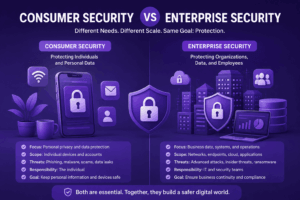
Consumer Security vs Enterprise Security
Signal Security Incidents
Questions about Signal security often arise after media reports describing compromised communications.
In most publicly discussed incidents, investigations have pointed toward issues such as:
-
Stolen devices
-
Malware infections
-
Insider threats
-
Human error
-
Misconfigured environments
-
Operational security failures
These differ fundamentally from successful attacks against Signal’s encryption protocol.
This distinction is important because it changes how organizations should allocate security resources.
Insight #3
Operational Environment Over Cryptography
The practical security of an encrypted messaging platform is determined less by its cryptographic algorithm and more by the surrounding operational environment, including device security, identity verification, and administrative controls.
Best Practices for Using Signal Securely
Organizations and individuals should consider the following checklist.
-
Keep operating systems updated.
-
Enable strong screen lock protection.
-
Verify Safety Numbers for sensitive conversations.
-
Enable registration lock.
-
Avoid rooted or jailbroken devices.
-
Protect devices with mobile endpoint security.
-
Be cautious of phishing attempts.
-
Regularly review linked devices.
-
Limit access to sensitive groups.
-
Educate users about social engineering.
Following these practices reduces risk far more effectively than changing messaging platforms alone.
When Signal May Not Be Enough
Signal may not fully address organizational requirements if you need:
-
Centralized administration
-
Enterprise identity management
-
Regulatory compliance reporting
-
Long-term archiving
-
Corporate audit trails
-
Organization-wide security policies
-
On-premises deployment
-
Private network operation
-
Integration with existing enterprise infrastructure
These requirements are common in sectors such as healthcare, finance, government, defense, manufacturing, and critical infrastructure.
Common Misconceptions About Signal Security
How Organizations Should Evaluate Secure Messaging
Instead of asking only, “Is Signal secure?”, decision makers should evaluate several dimensions.
-
Cryptographic protection
-
Device security
-
Identity verification
-
Administrative control
-
Compliance requirements
-
Data governance
-
User training
-
Infrastructure ownership
-
Operational risk
-
Incident response capabilities
A secure messaging solution is only as strong as the weakest layer in this overall security model.
Frequently Asked Questions
Is Signal still considered secure?
Yes. Signal remains one of the most respected encrypted messaging applications. There is no publicly known practical attack that breaks its end-to-end encryption when used correctly on uncompromised devices.
Has Signal encryption ever been broken?
No practical attack has publicly demonstrated that the Signal Protocol itself can be decrypted under normal conditions. Most reported incidents involve compromised devices, phishing, or operational mistakes rather than failures in the encryption algorithm.
Can law enforcement read Signal messages?
End-to-end encryption prevents service providers from accessing message content. However, messages may still be obtained from unlocked devices, device backups, or endpoints that have already been compromised through legal or forensic processes.
Does Signal hide all metadata?
No. Signal minimizes the amount of metadata it stores compared to many messaging platforms, but network operators can still observe information such as IP addresses and connection timing.
What is the biggest security weakness in Signal?
The biggest practical weakness is not the encryption itself but endpoint security. Malware, stolen devices, weak authentication, and social engineering are far more common attack vectors than attempts to break cryptography.
Is Signal appropriate for regulated businesses?
It can be suitable in some scenarios, but organizations should carefully evaluate compliance, audit, governance, identity management, and administrative requirements. Strong encryption alone does not satisfy every regulatory or enterprise security obligation.
Should organizations replace enterprise communication platforms with Signal?
Not necessarily. Signal is designed primarily for secure personal communication. Organizations that require centralized administration, compliance controls, on-premises deployment, or integration with enterprise infrastructure may need dedicated enterprise communication platforms instead of or alongside Signal.
Author
Helga Afon is a technology writer specializing in video conferencing, collaboration software, and workplace communication. She writes articles and reviews that help readers better understand enterprise communication tools and industry trends.